
If you’ve been browsing kitchenware lately or following culinary influencers, chances are you’ve come across the term “triply cookware.” Touted as a must-have for serious home cooks and professionals alike, triply cookware has gained a reputation for offering superior performance, durability, and even cooking. But what exactly is it, and is it really worth the investment?
Let’s break it down
What Does “Triply” Mean?
At its core, triply (or tri-ply) refers to three layers of metal bonded together to form the body of the cookware. Typically, it involves:
- Inner layer (cooking surface): Food-grade stainless steel, which is non-reactive and safe for all kinds of ingredients.
- Middle layer (core): A layer of aluminum or copper, known for excellent heat conductivity.
- Outer layer: Often stainless steel, making the cookware compatible with induction stoves and adding durability.
This combination results in cookware that brings out the best of all three materials: the heat conductivity of aluminum/copper, the durability and safety of stainless steel, and compatibility with all cooktops.
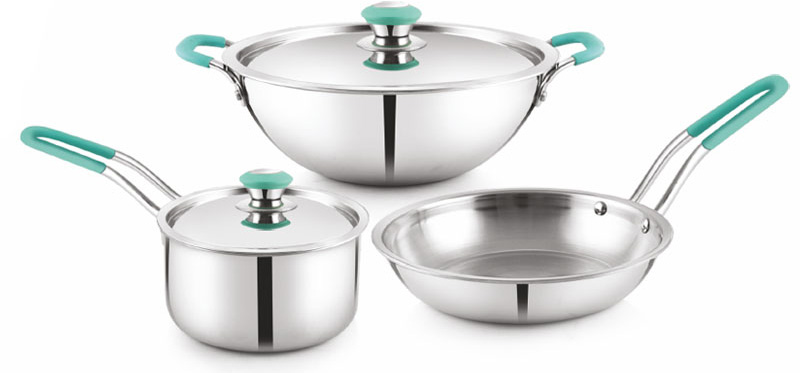
Why Is Triply Cookware So Popular?
Here’s why triply cookware is getting all the attention:
1. Even Heat Distribution
Thanks to the aluminum or copper core, triply cookware heats quickly and evenly. That means no more hot spots that cause your food to cook unevenly or burn.
2. Energy Efficient
Because it heats up faster and holds temperature well, triply cookware helps reduce cooking time and energy usage. Ideal for busy kitchens!
3. Durable and Long-Lasting
The outer stainless steel layer makes triply cookware extremely durable, scratch-resistant, and rust-proof. With proper care, it can easily last for decades.
4. Safe and Non-Reactive
Unlike nonstick pans that may degrade over time or react with acidic foods, the stainless steel interior of triply cookware is non-reactive and safe for high-heat cooking.
5. Compatible with All Cooktops
Most triply cookware is induction compatible, making it versatile for gas, electric, ceramic, and induction stovetops.
Triply vs. Regular Stainless Steel Cookware
You might be wondering: “Can’t I just use regular stainless steel cookware?”
Here’s the key difference:
Regular stainless steel cookware often has a single layer or a disc base with aluminum, meaning the heat is concentrated at the bottom. In contrast, triply cookware has aluminum sandwiched throughout the entire body, including the sides—ensuring consistent heating all over the pan.
Is It Worth the Price?
Triply cookware is typically more expensive than standard stainless steel or nonstick options. However, if you’re someone who:
- Cooks regularly
- Values durability and performance
- Wants professional-level results at home
…then the investment can pay off in the long run.
Many people find that once they switch to triply, they rarely go back.

Final Thoughts
Triply cookware isn’t just a marketing buzzword—it’s a thoughtfully engineered solution for better cooking. Whether you’re sautéing vegetables, searing meat, or simmering sauces, the even heat, long-lasting build, and overall cooking performance make triply cookware a standout in any kitchen.
So, is it worth the hype?
Absolutely—especially if you value precision, quality, and longevity in your cookware.